Data center jobs require expertise in electrical systems, cooling, automation and maintenance, along with professionals in construction, safety and project delivery. Server-room and IT roles are only part of the picture. Finland is both building new data centers and operating existing facilities, and these phases call for partly different skills. Experience from industry, energy, building services or demanding construction projects can transfer well when you make the connection to the role clear.
One data center needs people at two different stages
Building a new data center is a large and technically demanding undertaking. Before a facility enters service, its systems must be designed, procured, installed, inspected and tested so that they can later operate reliably around the clock. At this stage, the work centers on project progress, quality, safety and commissioning.
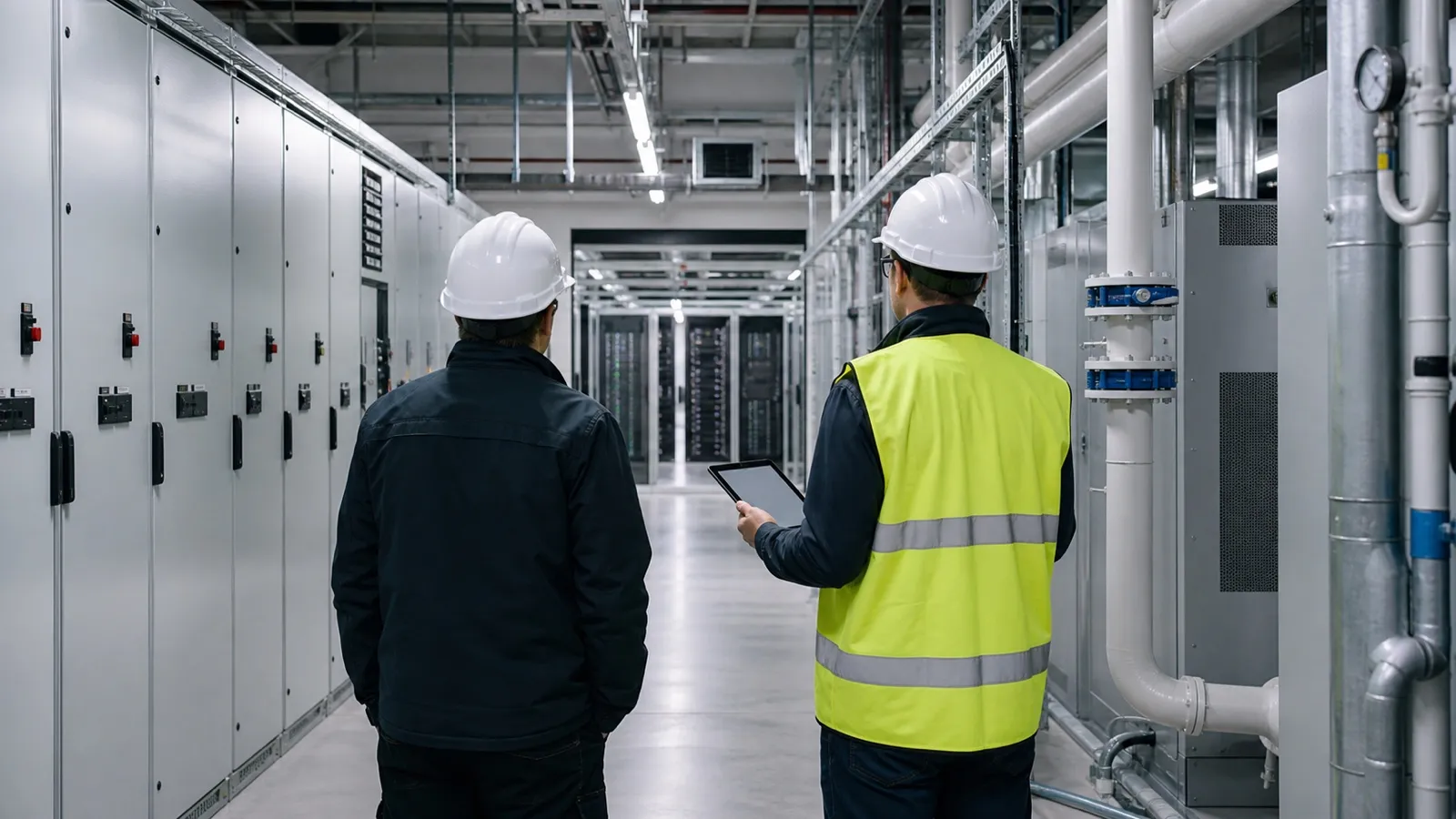
Once operational, a data center becomes a critical production environment. The power supply, backup power, cooling, automation, fire protection and other support systems must continue to work during faults and disruptions. Monitoring, preventive maintenance, incident response and precise documentation become central to day-to-day operations.
Commissioning, for example, connects project delivery with operations, and some specialists move from the construction phase into the running facility. The distinction still helps you understand what kind of experience an employer is likely to seek for a particular role.
Construction resembles a demanding industrial or infrastructure project
The construction and commissioning phase needs people with experience in client-side project management, site management, design, scheduling, procurement, contracts, occupational safety, quality assurance and commissioning. Roles may include construction managers, project controllers, HSE and QA/QC specialists, as well as procurement, contract and planning professionals.
The work combines technical understanding with the ability to manage a complex whole. A delay in one system can affect later installation and testing. This is why job descriptions repeatedly refer to schedules, costs, quality, change control, contractor management, safe permit-to-work procedures and up-to-date documentation.
Data center experience is useful, but other backgrounds can provide a strong starting point. Skills gained in power plants, electricity networks, industrial construction or other demanding property and infrastructure environments may be highly relevant to the role.
An operational data center is a 24/7 production environment
Operational roles commonly include electrical and mechanical critical facilities positions, maintenance, automation, technical monitoring, shift supervision and operations management. Some positions follow normal office hours, while others require shift work or readiness to respond to alarms.
Electrical work may involve medium- and low-voltage systems, UPS equipment, backup generators, power distribution and switching. Mechanical and building-services work can cover chillers, ventilation, pumps, pipework and fire-protection systems. Building management and energy management systems bring operational data into a shared view so that anomalies can be detected early.
In a critical environment, shared procedures matter alongside technical knowledge. Maintenance is planned in advance, and events are recorded so that the next shift or specialist can understand the situation. When a fault occurs, the work calls for calm troubleshooting and clear communication.
What skills appear repeatedly in job descriptions?
Electrical systems and energy
- You may work with: medium and low voltage, UPS systems, backup power, distribution, drawings and safe switching.
- Relevant experience may come from: industry, power generation, electricity networks, building electrical systems and electrical contracting.
Cooling and building services
- You may work with: chillers, ventilation, pumps, pipework, water management and fire protection.
- Relevant experience may come from: building services, industrial cooling, process industries and property maintenance.
Automation and maintenance
- You may work with: BMS and EMS platforms, alarms, preventive maintenance, fault isolation and documentation.
- Relevant experience may come from: industrial automation, maintenance, building automation and production facilities.
Project delivery
- You may work with: schedules, costs, procurement, contracts, quality, contractors and commissioning.
- Relevant experience may come from: construction, infrastructure, energy and industrial projects, and project controls.
Safety and compliance
- You may work with: risk assessments, permit-to-work procedures, inspections, audits and the handling of safety deviations.
- Relevant experience may come from: construction sites, industry, HSE roles and other regulated operating environments.
The emphasis can be very specific in an individual position. An electrical engineer may not need deep cooling expertise, and a contract specialist will not be expected to maintain a UPS system. Understanding how a data center works as a whole still helps you see how your work affects other teams.
Can you move into the data center sector from another industry?
Often, yes. A move is most realistic when you can explain which part of your previous work corresponds to the responsibilities of the new role. Troubleshooting learned in industrial maintenance, electrical expertise from the energy sector, cooling systems from building-services projects or contractor management from an infrastructure project can all be relevant in data center work.
Useful backgrounds include industrial maintenance, electrical engineering and energy, HVAC and cooling, automation, telecom and ICT infrastructure, construction, occupational safety, procurement, contracts and project controls. Suitability is always role-specific, however. Read the mandatory qualifications, level of responsibility and working arrangements in the job description carefully.
An industry name alone says little in an application. Give concrete examples of the systems you have worked with, how critical the environment was, what you did during a fault, how maintenance was documented and how many suppliers or contractors you coordinated.
Qualifications, certifications and languages depend on the role
Technical operations positions may be open to candidates with vocational training or an engineering degree. Design and leadership roles often place more weight on higher education and broad project experience. Some positions require an electrical qualification, refrigeration qualification or another system-specific certification. These are not required for every role, but they can be a clear advantage.
English is the working language on many data center projects because designers, equipment suppliers and contractors may come from several countries. Finnish is often needed when working with local contractors, safety procedures, authorities and the practical operation of a facility. Requirements vary by role: some job descriptions require both Finnish and English, while in others Finnish is an advantage.
Critical-infrastructure positions may also involve background or security screening. This does not apply to every role in the same way, so check the job description and ask the recruiting organisation when necessary.
How to assess whether a role is right for you
When you read a data center job description, start by checking five things:
- Is the role connected to construction, commissioning or operation of a completed facility?
- Which systems or project responsibilities form the core of the job, and which skills are merely useful additions?
- Does the position involve shifts, on-call duty, travel or continuous work on site?
- Which qualifications, certifications and languages are mandatory?
- Which example from your own work demonstrates your experience in safety, quality, incident management or project delivery?
If you can connect your previous experience to several parts of the role, a sector change may be realistic. If you lack an essential statutory qualification or practical system experience, find out whether you can gain it before applying or while working. You do not need to know everything from the start. If a skill that is essential to the position is missing, address it clearly.
Frequently asked questions about data center jobs
Do applicants need previous data center experience?
Not always. In many roles, suitable experience from a demanding industrial, energy, construction or facilities environment can provide a sufficient starting point. Direct data center experience may still be required or strongly preferred in leadership, commissioning and critical operational positions.
Are data center jobs based on shift work?
Some are. Positions connected to round-the-clock operations may involve shifts, on-call duty or alarm response. Project, design, procurement and contract roles are more often carried out during normal working hours, although construction phases can require flexibility.
Is English enough for data center work in Finland?
It depends on the role. English may be the main working language on an international project, but Finnish is often needed for cooperation with local contractors, safety matters and practical operations. Always check the exact language requirement in the job description.
There is no single route into the data center sector. The important step is to identify which construction or operations roles match your experience and explain that connection concretely in your application.
Ready to take the next step? Find your next role.